You keep the client, but lose payroll scaffolding
The offer can feel oddly simple: same client, familiar work, “just” switching to contract. The number on the agreement looks like a raise, and the calendar still shows a steady load of work. But the moment you’re not on payroll, a lot of invisible machinery disappears—without anyone making a big announcement about it. The first week is usually when the expectation gap shows up: nothing is “wrong,” yet nothing is being handled for you anymore.
On payroll, cash flow is pre-engineered: withholding happens, paydays land on predictable dates, and your employer is quietly paying a second set of costs around you. As a contractor, you keep the client relationship but lose that scaffolding. The constraint is timing and friction: you may wait on invoicing and approvals, you may need a separate account just to avoid spending tax money, and you’ll feel every missing default because you have to replace it deliberately—before the first slow payment forces the issue.
The first mismatch: your rate isn’t your paycheck
The contract rate is the first number that looks concrete, so it’s easy to treat it like a salary translation. In practice it behaves more like revenue. On payroll, your paycheck is already net of withholding, plus the employer is absorbing part of the tax load and paying benefits in the background. As a contractor, the same “annualized” figure can shrink fast once you subtract self-employment taxes, income taxes, health coverage, and the plain fact that not every hour you work is billable.
The mismatch shows up when you try to recreate your old take-home. A $120/hour rate can feel high until you back out 25–35% for taxes, then add health insurance, then remember you’ll have admin time: invoicing, chasing approvals, fixing scope creep. The constraint isn’t just cost; it’s predictability. Your old paycheck was a finished product. Your new rate is just the starting ingredient.
Your first invoice shock: timing beats totals
The first month tends to feel fine right up until it doesn’t. Work is happening, hours are logged, and the client is still there—so the brain expects the same steady deposit cadence. Then you send an invoice and discover the payment clock starts after submission, not after the work. If the agreement is net-30 or net-45, and the client needs approval or a purchase order, “one month of work” can turn into “money two months from now.” Totals can look healthy on paper while the checking account is getting tight in real time.
The shock usually isn’t that the client won’t pay; it’s the gap you have to finance. Rent and premiums don’t wait for accounts payable, and credit cards quietly become bridge loans with expensive interest if you misjudge timing. It gets worse if the invoice is kicked back for a missing code, the scope language is vague, or the client batches payments on a specific day. After one cycle, the focus shifts: runway, billing frequency, and payment terms start to matter more than the headline rate.
Taxes stop being automatic; you become payroll

After the first delayed payment cycle, the next surprise is that the “missing” money isn’t just benefits—it’s withholding. On payroll, taxes were skimmed off before the deposit hit, and the employer handled the other side of the payroll tax bill. As a contractor, the full amount arrives (eventually), and it’s on you to split it into spendable cash and tax cash. The constraint is behavioral as much as math: if you let everything land in one checking account, it’s easy to spend what was never really yours.
In practice, you’ve become your own payroll department. That means setting a tax reserve (often 25–35% as a starting range, then adjusting once you see real numbers), tracking deductible expenses cleanly, and planning for estimated tax payments rather than a once-a-year settle-up. Miss by enough and you can end up with penalties, not just a big April bill. The work is boring and time-sensitive: separate accounts, a simple ledger, and a calendar for quarterly due dates—because cash flow already has gaps, and taxes don’t wait for the next invoice to clear.
Benefits vanish quietly, then cost loudly
Once you’ve built the habit of reserving tax cash, the next drain is less visible at first. The paycheck didn’t just carry wages; it carried subsidized health insurance, employer retirement contributions, short-term disability, and the quiet convenience of group pricing. None of it ends with a dramatic moment. It just stops being “already handled,” and the gap only becomes obvious when you try to recreate the same coverage on your own timeline.
The cost shows up in uneven, deadline-driven ways. Health insurance isn’t just a monthly premium; it comes with deductibles, out-of-network surprises, and a coverage start date that might not match the day you leave payroll. Retirement gets harder too: replacing a match means choosing a plan, setting contribution targets, and accepting that cash-flow hiccups will interrupt consistency. The real constraint is that benefits are paid with after-tax dollars and due on schedule, even when invoices aren’t. If you don’t price for that, you end up “making more” while quietly buying less security.
Same job, new overhead: tools, expenses, protection
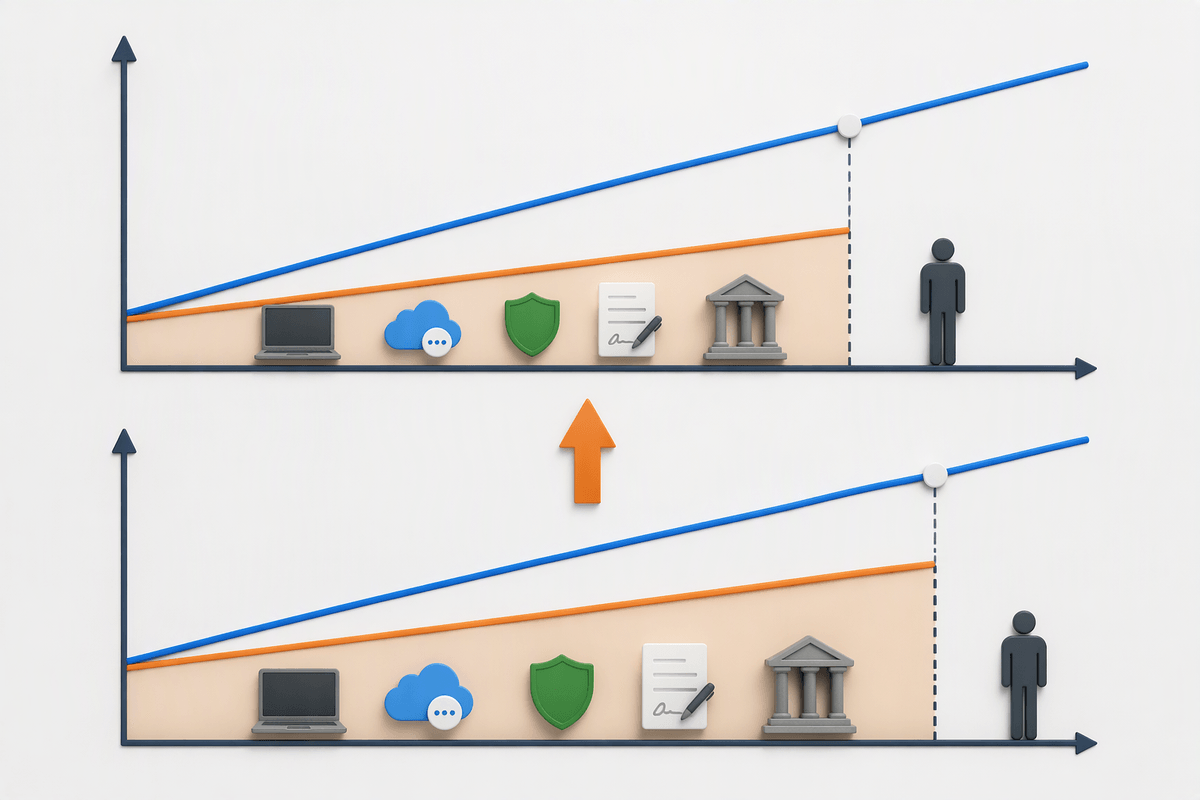
By the time you’ve replaced benefits, the work still looks familiar on your calendar, but the list of things you now have to pay for starts creeping into the month. The laptop you used to “just have” becomes a replacement plan. Software stops being a reimbursed line item and turns into subscriptions that renew whether the client is slow-paying or not. Even simple costs—accounting, a business card, a faster internet tier—stack up because they’re small enough to ignore until they’re not.
The bigger jump is protection. If you’re asked for professional liability, general liability, or a cyber policy, the quote can land right when cash is tight from net-30 timing. Then there’s the friction cost: contracts reviewed, an LLC filing, separate banking, and the occasional unbillable hour spent proving compliance. None of it changes the core work, but it changes the break-even point you’re actually working against.
Revised thinking: price for volatility, not optimism
After a couple of cycles, the math stops being about whether the rate “beats” your old salary and starts being about whether it survives an ordinary month. Not a disaster month—just one with a late invoice, a dentist bill, a software renewal, and a quarter when estimated taxes land before a big payment clears. That’s when optimism gets expensive, because it tells you to price like everything will run smoothly.
The more realistic approach is to price for volatility: build a buffer into the rate for nonbillable admin time, payment timing gaps, and coverage you’re now buying with after-tax dollars. If the client won’t accept terms that let you hold cash (shorter net, partial upfront, predictable billing cadence), the fallback isn’t “work harder.” It’s deciding whether the rate is high enough to pay for uncertainty without borrowing against your own life.