The Strange Taste That Appears Later
The first sign may arrive when breakfast tastes faintly wrong. Coffee seems unusually bitter, fruit has a metallic edge, or a familiar meal leaves an unpleasant coating that was not there the day before. Because the pine nuts were eaten earlier, the connection is easy to miss. This delayed timing can feel confusing, especially when there was no immediate itching, swelling, stomach upset, or other noticeable response.
In some people, the altered taste begins one or two days after eating pine nuts and continues through ordinary meals. It may fade within several days, although lingering changes can sometimes last for weeks. The experience is often described as bitter, metallic, sour, or strangely chemical, and its intensity may shift from one food to another. That pattern can fit what is commonly called pine mouth, but it is not perfectly predictable. Some people notice it after a small serving, while others eat pine nuts without any effect, suggesting that both individual sensitivity and differences between pine-nut sources may matter.
Why Pine Nuts Are Usually Suspected
By the time the taste changes, the pine nuts may be long gone from the plate, yet they remain the most obvious clue. The timing is part of what draws attention to them: the bitter or metallic sensation often develops after a delay rather than during the meal. That makes the connection less like a typical immediate food reaction and more like a pattern noticed only in retrospect.
Pine nuts are also suspected because the change can persist while other explanations seem less convincing. A person may brush their teeth, switch foods, or skip coffee, only to find that the same unpleasant flavor returns with the next meal. Still, the connection is not proof. Different pine-nut species, growing conditions, processing methods, or storage histories may help explain why one batch seems associated with symptoms while another does not. Individual sensitivity may matter as well, and the experience is inconsistent enough that many people cannot identify a reliable amount or source that triggers it.
Pine Mouth Is Not Typically An Allergy
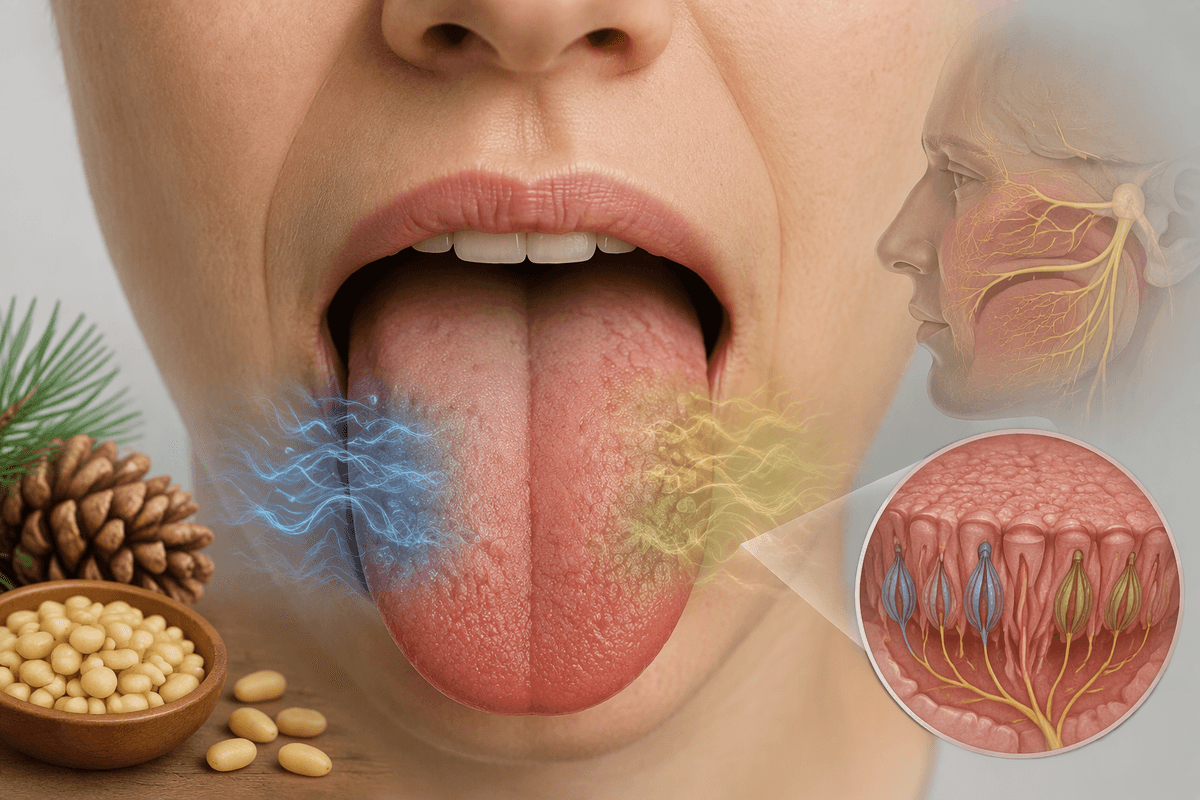
There is usually no sudden rush of symptoms at the meal itself. Instead, the mouth may seem normal at first, followed by an altered taste a day or two later. That delayed pattern is one reason pine mouth is not typically viewed as a standard food allergy. An allergy more often causes an immediate response, such as itching, hives, swelling, breathing trouble, or digestive symptoms, although reactions can vary and should not be dismissed when they are concerning.
The distinction matters because a lingering bitter or metallic taste alone does not necessarily mean the immune system is reacting in the usual allergic way. Pine mouth appears to involve a temporary change in taste perception, with the exact cause still uncertain and the experience differing between people and pine-nut sources. It may persist despite avoiding pine nuts for a while, which can make the original connection seem doubtful. However, new swelling, breathing difficulty, widespread hives, repeated vomiting, or rapidly worsening symptoms call for prompt medical attention rather than being attributed to pine mouth.
How Ordinary Flavors Become Unpleasant
A sip of coffee may suddenly seem harsh, while something normally sweet carries an unpleasant chemical or metallic edge. The food itself may not have changed; rather, the altered taste seems to affect how ordinary flavors are registered. Bitter notes can become more noticeable, and foods with strong acidity, sweetness, or roasted flavors may make the sensation stand out even more. This can create the impression that nearly everything tastes wrong, even when the change is most obvious with particular meals.
That shift also explains why masking the taste is often unreliable. Brushing the tongue, using mouthwash, or choosing bland foods may provide brief relief, but the unpleasant flavor can return with the next bite. Saliva, temperature, texture, and the combination of foods may all influence how strong it feels from one moment to the next. Because the experience varies, a person may suspect a new ingredient, poor food quality, or a mouth problem before noticing that the pattern began after eating pine nuts. The inconsistency can be frustrating, especially when the taste persists despite otherwise feeling well.
When Attempts To Mask It Backfire
After a few unpleasant meals, it is tempting to overpower the taste with strong coffee, citrus, sweets, mints, or heavily seasoned food. For a short time, that may seem to work. Then the next bite can feel even more bitter, sour, or metallic, making the original change seem worse than before. Strong flavors may not remove the altered sensation; they may simply draw more attention to it or add competing tastes that are also interpreted unpleasantly.
This can lead to a cycle of testing one remedy after another, while the underlying pattern continues on its own timetable. Mouthwash, tongue brushing, and extra fluids may improve freshness without changing the taste itself, particularly if the sensation is arising from altered taste perception rather than residue in the mouth. Avoiding every food that tastes strange can also become impractical, since the reaction may vary from meal to meal. A brief improvement does not necessarily mean the cause has been corrected, just as a difficult meal does not prove that the food was spoiled.
What Makes The Reaction Hard To Predict

One batch of pine nuts may seem harmless, while another is followed by an unpleasant taste that arrives later. Even when the serving size appears similar, the experience can differ in timing, intensity, and duration. Differences between pine-nut species, growing conditions, processing, storage, or preparation may be involved, but these details are rarely visible to the person eating them. That makes it difficult to identify a dependable trigger or predict whether another serving will cause the same reaction.
Individual sensitivity adds another layer of uncertainty. The taste may begin after a day or two, fluctuate during the day, and become more noticeable with coffee, fruit, or other strong flavors. It may fade gradually, then seem to return briefly with a particular meal. This uneven pattern can make the original food connection seem accidental, especially when several meals, ingredients, or mouth-care products have been introduced since then. A reaction that follows this loose, delayed course may still fit pine mouth, but persistent or worsening changes do not automatically belong to that pattern.
When A Bitter Taste Needs Another Explanation
When the bitter taste keeps returning long after the suspected meal, the timing becomes less convincing. Pine mouth may linger, but it generally follows a recognizable sequence: pine nuts are eaten, the taste change appears after a delay, and the sensation gradually eases. A taste that began before eating pine nuts, continues without any sign of improvement, or steadily becomes stronger may have another explanation. Dry mouth, recent illness, dental irritation, reflux, or a new medication can also affect how foods and drinks taste, sometimes without causing much discomfort elsewhere.
The same caution applies when the taste occurs with mouth sores, pain, fever, marked dryness, trouble swallowing, or other new symptoms. These details do not identify a cause by themselves, but they make it harder to assume the change is simply pine mouth. If the altered taste persists, repeatedly returns without a clear food connection, or interferes with eating and drinking, discussing it with a healthcare professional or dentist may help sort out the possibilities. A delayed, temporary change can fit the pine-nut pattern; an ongoing or worsening one deserves a wider view.