Trieste in a nutshell: Italy, but not quite
I almost skipped Trieste because, on a map, it looks like the kind of “quick add-on” that quietly eats a half-day in trains and check-ins. And if you’re coming from Venice or Verona, that friction is real: Trieste only feels easy once you’re already committed to the northeast corner of Italy.
What you get in return isn’t the postcard Italy of canals or cliffside villages—it’s a port city with a slightly European-left-turn sensibility: grand Habsburg-era streets, sea-facing squares, and a rhythm that’s more café-and-newspaper than gelato-and-selfie. It can feel less instantly charming than Venice, but also less exhausting; crowds thin out fast once you leave the few headline viewpoints.
In a nutshell, Trieste is “Italy, but not quite,” and that’s the point. If you want a place that rewards walking, reading the architecture, and lingering over coffee, it punches above its fame; if you’re chasing iconic sights per hour, it may register as too subtle for the detour.
Who Trieste is perfect for (and who it isn’t)
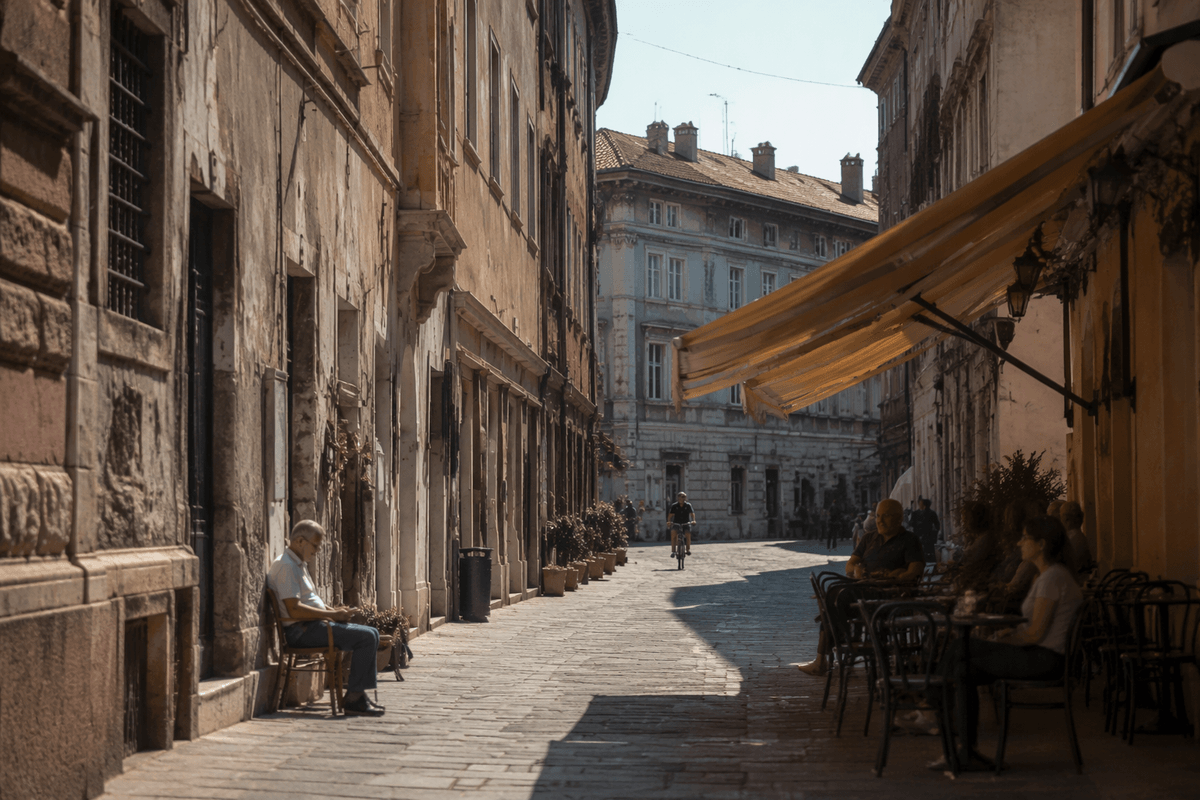
The moment I knew who Trieste is for was watching people “do nothing” on purpose—an espresso that lasts longer than it should, a slow lap around Piazza Unità, then back to the shade. If you like cities where the payoff comes from texture (architecture, border history, good food without fanfare) rather than a checklist of icons, Trieste fits neatly into a 3–5 day Northern Italy add-on—especially if Venice has already maxed out your tolerance for crowds and queues.
It’s ideal for culture-and-café travelers, shoulder-season walkers, and anyone who’d rather spend money on meals than timed-entry tickets. It’s also a smart bridge if you’re threading Italy to Ljubljana: the logistics feel more justified when Trieste is a hinge, not a side quest. Less perfect if you want beaches, late-night energy, or “wow” sights every hour; the city can read as gray in bad weather, and the best bits involve uphill effort (or buses) that won’t suit a tight, monument-heavy schedule.
The unmissable sights: piazzas, sea views, history
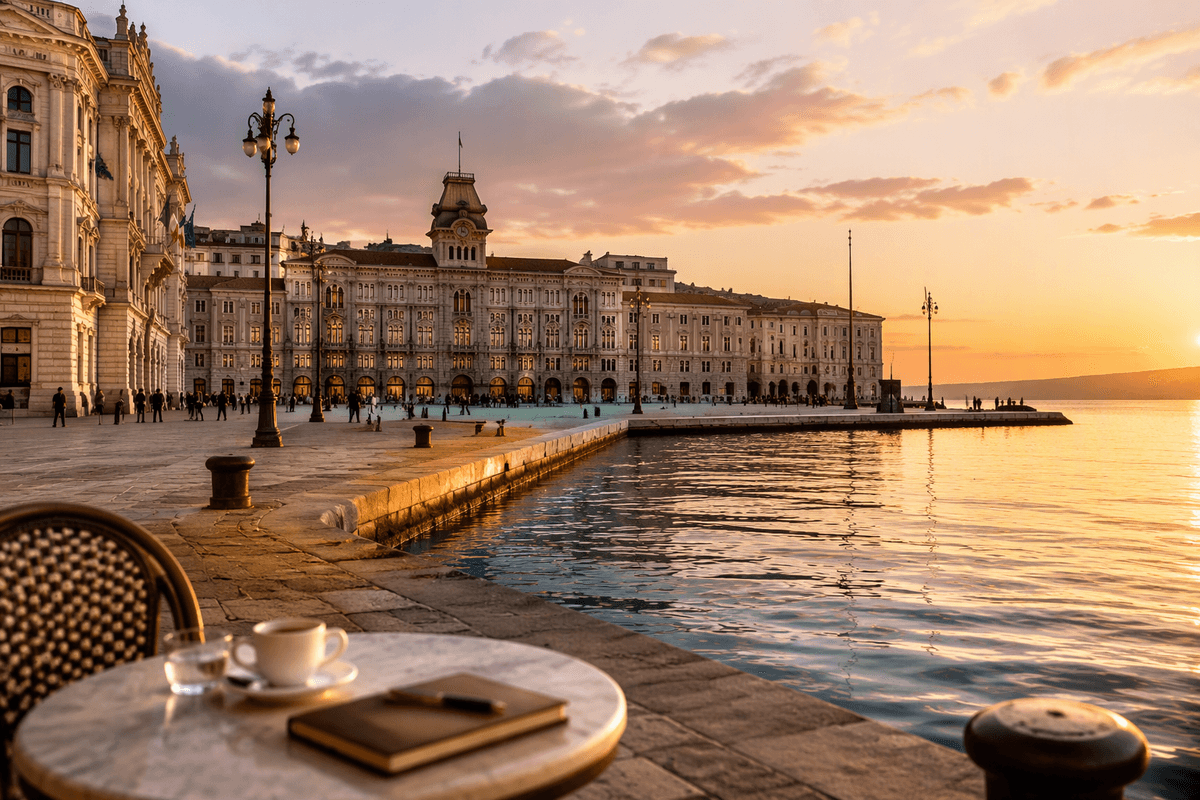
I felt Trieste “click” the first time I walked into Piazza Unità d’Italia from the narrow streets behind it—suddenly you’re standing in a huge, sea-facing room of stone, and it’s genuinely hard to rush. It works best early or near sunset, when the light hits the waterfront and the square is more locals than tour groups; midday can feel flat and windy, and there’s not much shade if you’re trying to linger.
From there, the most efficient payoff-per-step is the Molo Audace (quick, dramatic, and free) and then the Canal Grande area—not because it’s Venice-lite, but because it gives you a clean little loop of water, churches, and cafés without committing hours. If you’re comparing it to Venice, the advantage is breathing room; the drawback is that the “icon” factor is quieter, so you have to meet it halfway.
For history with a view, I’d pick one: the hill up to San Giusto (cathedral + castle) if you want the city’s layered timeline in one place, or Miramare Castle if you want the Habsburg mood on the water. Doing both in a short stay is possible, but it starts to eat the day in bus timing and uphill fatigue—Trieste rewards pacing more than conquest.
Trieste’s vibe: coffee culture, literature, Austro-Italian mix
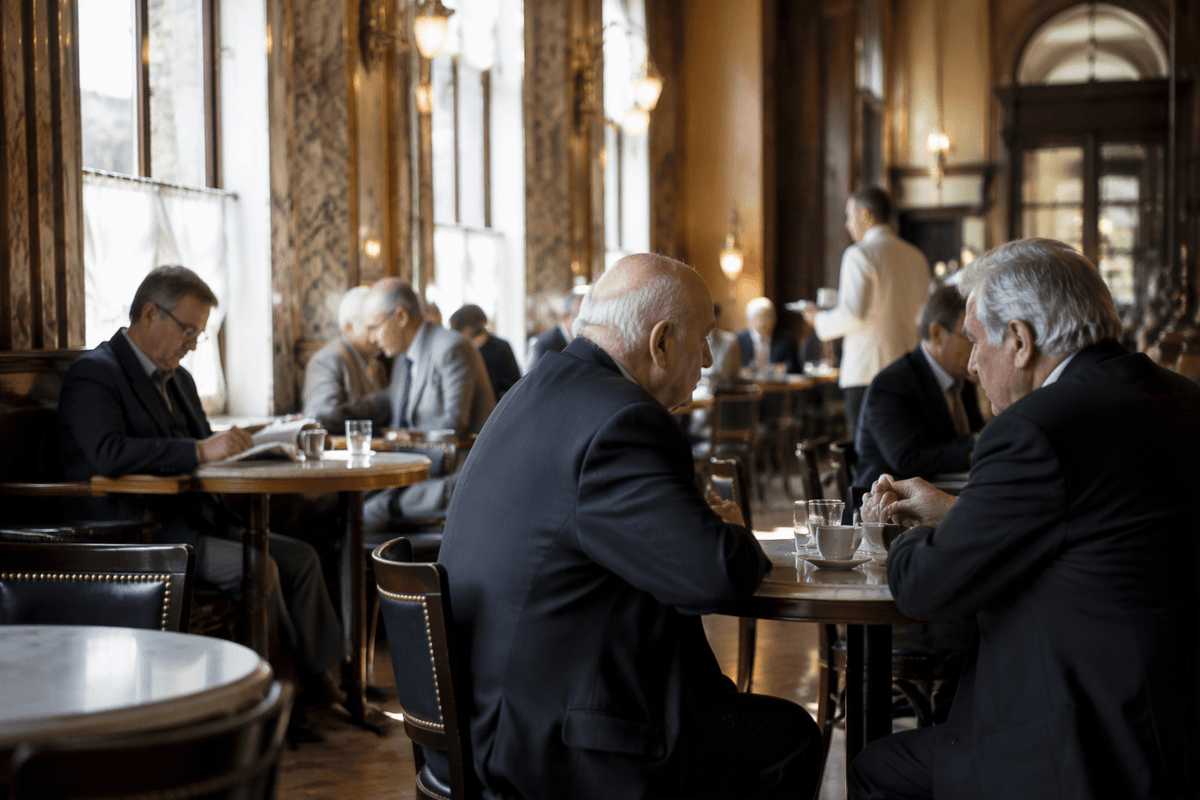
I hit my first real “Trieste moment” mid-morning in a historic café, when I realized nobody was in a hurry—not the staff, not the suited regulars, not the solo readers camped at marble tables. If you’re used to Venice’s constant motion, Trieste’s coffee culture can feel almost stubbornly slow, and it works best when you plan around it: one or two intentional stops, not ten frantic espressos between sights. The only catch is timing—arrive too late and the classic places can feel crowded in a room-sized way, even if the city outside is calm.
That slower rhythm pairs with Trieste’s literary streak in a way that’s more lived-in than museum-like: bookshops, plaques, and a general sense that people actually read here. It’s also where the Austro-Italian mix stops being an abstract history lesson and becomes the city’s default setting—grand façades and orderly streets, but with Italian looseness around food and conversation. If you want a coastal town “wow” factor, this can seem muted; if you want a city that feels distinct without needing a big-ticket attraction, it’s exactly the point.
Logistics that affect the trip: timing, walks, basing
I noticed the logistics first when I tried to “just pop up” to San Giusto after lunch and realized Trieste is flatter than it looks until it suddenly isn’t. The center is wonderfully walkable (Piazza Unità, the waterfront, Canal Grande), but the city’s best viewpoints come with stairs, wind, and a time penalty if you’re not wearing decent shoes or you’re arriving with luggage. If you’re only giving Trieste a day, I’d keep the core loop on foot and choose one effortful add-on—either the hill or Miramare—so you’re not spending the afternoon negotiating bus intervals and uphill fatigue.
Timing matters more here than in “big-ticket” cities: Trieste feels easiest in shoulder season and on weekdays, when you can actually linger without the café rooms filling up all at once. For basing, it’s cleanest as a one- or two-night stop if you’re moving between Venice/Verona and Ljubljana; making it a day trip tends to turn the whole experience into transit math and a rushed sunset. Staying near the waterfront or Borgo Teresiano keeps mornings efficient, but it also means paying a little more to save your legs and your clock.
Verdict: a smart stopover or a standalone destination?
My verdict is mostly binary: Trieste is a smart stopover if it sits naturally on your Venice/Verona-to-Ljubljana line, because the city pays you back in calm and character without demanding museum marathons. If you’re forcing it as a detour, the value drops fast—transit time and check-in/out friction can swallow the very hours that make Trieste feel good.
For most 3–5 day add-ons, I’d call it a confident yes for 1–2 nights: one core waterfront loop, one “effort” sight, and then let the cafés do the rest. Treat it like a place to slow down, not to collect highlights, and you’ll leave satisfied; try to make it compete with Venice on spectacle, and it can feel quietly underwhelming.