Car-free Vancouver: what to expect and plan
The first surprise in Vancouver without a car isn’t distance—it’s the micro-decisions. A “quick” hop can be 12 minutes on the SkyTrain, or 35 minutes if it involves a bus connection that only comes every 15–20 minutes. Add rain and you’ll feel that gap fast.
Plan your days as clusters: downtown/Stanley Park together, Granville Island with nearby neighborhoods, and the North Shore as its own half-day. Transit is reliable in the core, but late-night options thin out and transfers are where time leaks. If you’re trying to keep costs down, save rideshares for the one annoying leg—when fatigue, weather, or timing makes the “cheap” route expensive in minutes.
Where to stay for easy transit access
The first lodging decision I regretted even considering was “somewhere cheap, anywhere.” In Vancouver, cheap gets expensive when you’re 12 minutes from a SkyTrain station on foot—especially after dinner, in the rain, when the last bus is a gamble. If you’re going car-free, pay for proximity to a frequent line, not a nicer lobby.
For maximum flexibility, aim for a short walk to a Canada Line or Expo/Millennium Line station. Around Waterfront, Yaletown-Roundhouse, and Olympic Village works brilliantly for splitting days between Stanley Park, downtown, and Granville Island without stacking transfers. You’re trading dollars for fewer “dead” minutes and fewer weather-dependent walks.
If you want to keep costs down, look at Mount Pleasant near Broadway-City Hall or the Commercial–Broadway area. You’ll often get better value and still have fast rail access, but you’ll feel the trade-off late at night: more reliance on buses, and more chances for a missed connection to turn into a 25-minute wait.
Getting around: SkyTrain, buses, SeaBus basics
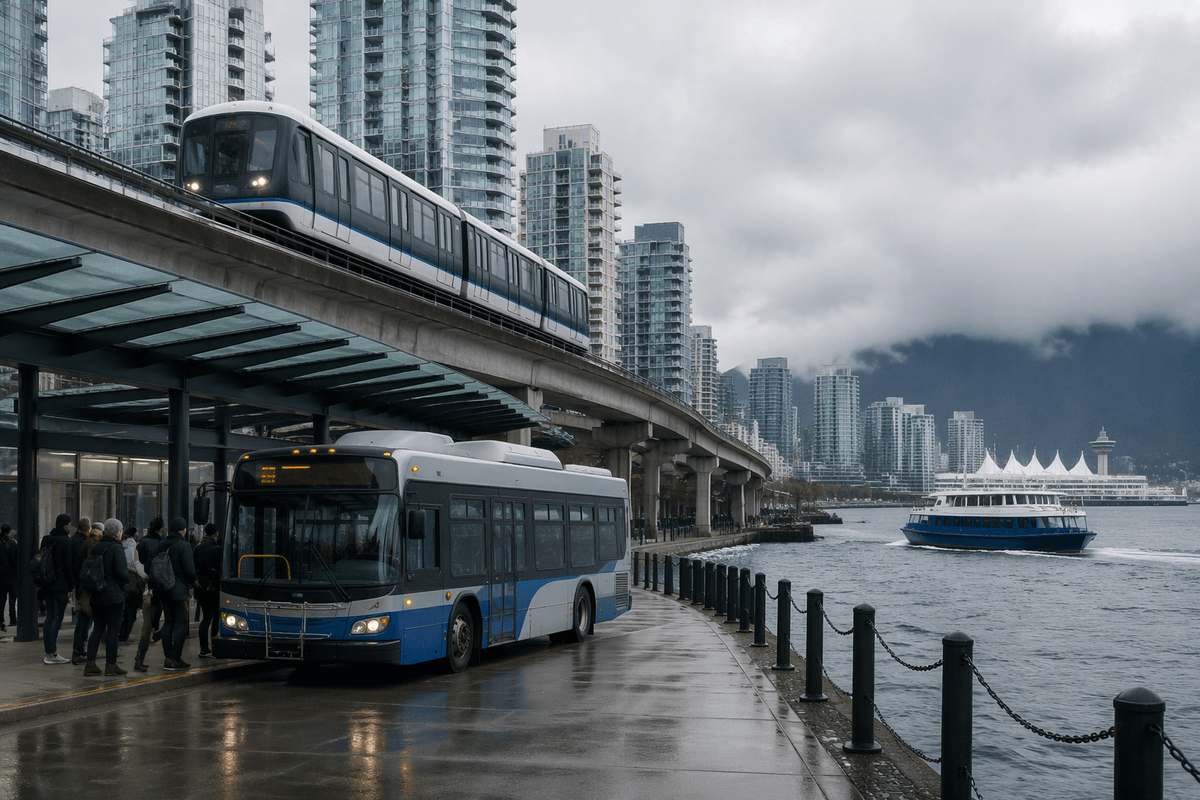
The first time I tried to “just take transit” in Vancouver, the mistake wasn’t picking the wrong line—it was underestimating the connection. SkyTrain feels like a cheat code between clusters (fast, frequent, weather-proof), but the moment you add a bus transfer, your trip time becomes a question mark that swings with headways and traffic.
In practice, I treat SkyTrain as the spine: Canada Line for airport and downtown; Expo/Millennium for hopping east-west across the core. If you’re staying near a station, you can run a day like errands—downtown in the morning, a neighborhood meal, back to reset—without paying the “parking tax” in money or stress. The service is still there, but missed connections start to hurt more, so I pad plans with a little slack.
Buses fill the gaps to places SkyTrain doesn’t touch cleanly (Granville Island approaches, parts of Kits, and the North Shore bridges). They work, but they’re the first thing I downgrade when it’s raining or I’m tired. The SeaBus is the nice exception: it’s simple, scenic, and predictable—more like an extension of SkyTrain than a “maybe” transfer.
Walkable loops: seawall, downtown, Stanley Park
The first time I tried to “fit in” Stanley Park on foot, I learned the real constraint isn’t distance—it’s when your feet start voting against you. Downtown looks compact on a map, but once you’re detouring for views, coffee, and crosswalks, a casual loop quietly becomes half a day. That’s not a problem if the weather is holding; it’s a problem if rain is building and your next plan depends on showing up dry.
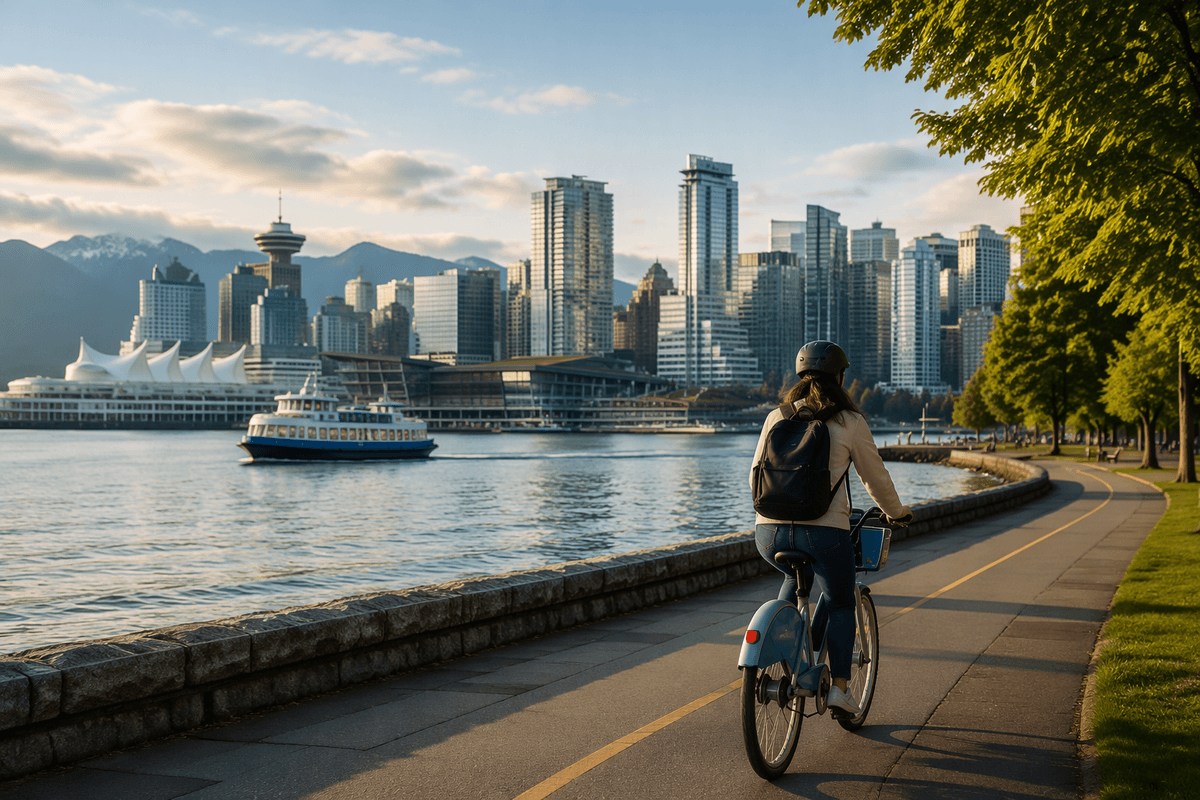
The seawall is the easy win: it’s intuitive, scenic, and hard to mess up. I like treating it as a connector rather than a “hike”—start downtown, drift toward Coal Harbour, then decide in real time whether you’re continuing into Stanley Park or cutting back through the West End to keep dinner plans intact. On nice afternoons, your pace is limited by other people, not your fitness.
Inside Stanley Park, walking works best when you’re choosing a few anchors (a viewpoint, a beach stop, one long stretch of seawall) instead of trying to “complete” it. If you’re tight on time, the smart move is to walk the most beautiful segment and save the rest for a bike day—because the full loop on tired legs is exactly how a cheap, car-free plan turns into an overpriced rideshare home.
Bikes, Mobi, and e-scooters: when they win
The moment I stopped trying to walk everything was the moment Vancouver got easier. Bikes and e-scooters aren’t just “fun”—they’re how you erase the awkward gaps between transit and the places you actually want to be, especially when the map says “25 minutes on foot” and the bus option looks like two transfers and a wait.
Mobi bikes win in exactly two scenarios: seawall-adjacent rides (Coal Harbour toward Stanley Park) and short cross-neighborhood hops where you’d otherwise lose time to a bus headway. The docks can be empty when everyone has the same idea, and the return problem is real if your destination isn’t dock-dense. E-scooters can be faster for one-way flexibility, but they’re a fair-weather tool: rain, wet leaves, and uneven pavement turn “cheap and quick” into “slow and careful.”
If you’re trying to keep costs down, use wheels to replace the most inefficient leg, not the whole day. I’ll bike the scenic connector, then switch back to SkyTrain when I’m sweaty, tired, or the weather shifts—because the best car-free plan is the one that doesn’t demand perfect conditions.
Day trips without a car: North Shore, Granville, Steveston
I hesitated on the North Shore at first because it looks “close,” but it’s the kind of close that can eat time if you stack transfers wrong. The clean play is SeaBus to Lonsdale Quay, then a bus from there—simple, frequent, and it avoids the bridge traffic roulette. If you push it late, you’ll feel the schedule gaps on the return, especially if you’re tired and the weather turns.
Granville Island is the opposite problem: it’s near downtown, yet oddly transfer-prone. If the bus looks clunky, walking or a quick bike hop often wins—especially from Yaletown, Olympic Village, or Kits-side approaches. The catch is carrying anything back (market snacks become “why did I do this” on a wet walk), so this is where a short rideshare can be the most cost-effective “one annoying leg.”
For Steveston, commit to it as a half-day: Canada Line down toward Richmond, then a bus the rest of the way. It’s doable and cheaper than a car, but it’s not fast, and missed connections compound. I’d go earlier, keep dinner plans flexible, and treat the return as a hard stop before late-night frequencies thin out.
Trade-offs, costs, and a simple car-free checklist
The only moment I still second-guessed going car-free was when the weather flipped and my “simple” return involved two buses and a 20-minute wait. That’s the real trade-off in Vancouver: you save big on parking, gas, and rental fees, but you pay in connection risk—especially at night, in rain, or when you’re carrying anything heavier than a jacket.
Cost-wise, I try to treat rideshares like a pressure valve, not a default. If a trip is one train plus a walk, transit wins. If it’s a bus transfer on a 15–20 minute headway, after dinner, in drizzle, the rideshare can be the cheaper decision once you price in time and frustration. Bikes and scooters are the middle ground: fast and budget-friendly, but only when conditions and dock/parking availability cooperate.
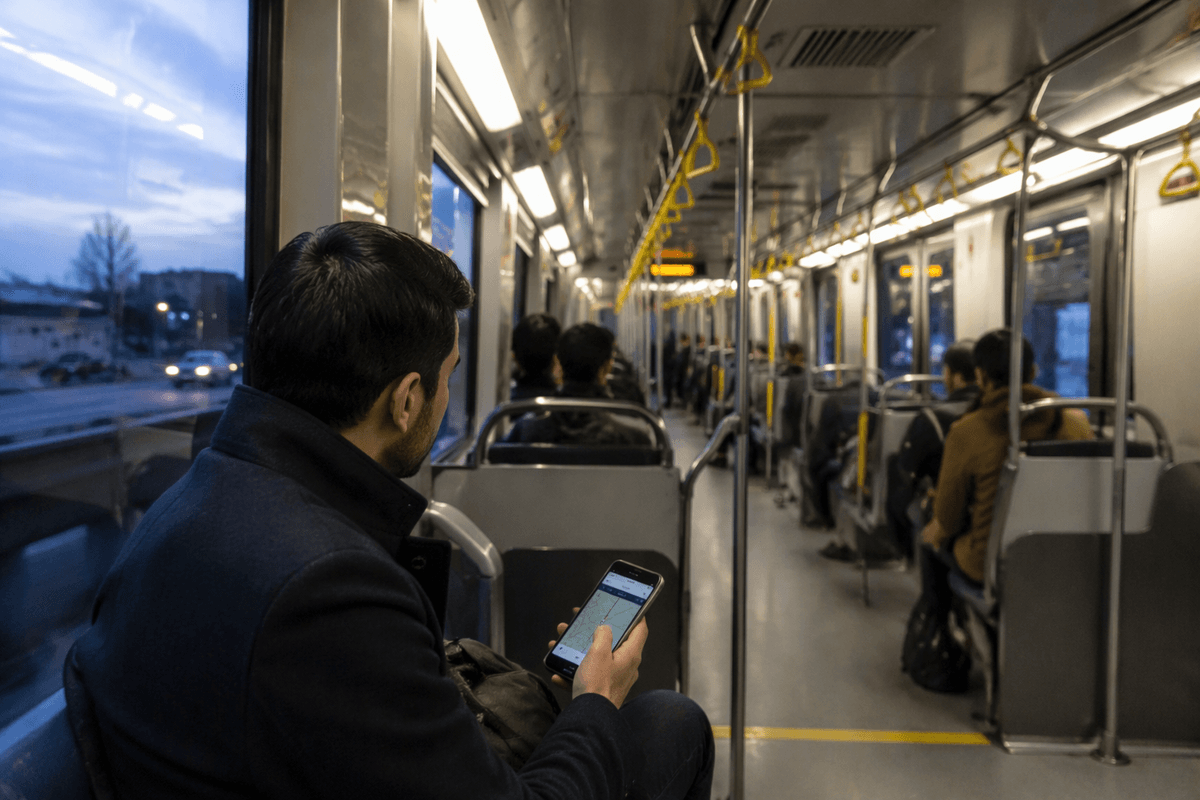
Quick checklist before you lock the day: (1) Cluster plans so you’re not crossing the city twice. (2) Identify your “must-be-on-time” slot and build slack around it. (3) Pick one leg you’re willing to pay to simplify. (4) Bring a light rain layer and assume at least one transfer will be slower than the app promised.