Why cut watermelon turns risky faster than expected
You notice it first when you grab a slice for a quick snack: the container is wetter than yesterday, and the cold fruit seems to “warm up” fast on the counter. Nothing looks obviously wrong, so it’s easy to assume it’s still safe. But once watermelon is cut, the protective rind is gone, and the juicy surface becomes an easy landing spot for whatever gets introduced by knives, hands, cutting boards, or nearby foods.
The risk doesn’t wait for dramatic signs. Watermelon’s high moisture and sugar can support faster microbial growth, especially if it sat out during prep, rode home warm from the store, or bounced between a cold shelf and a warmer fridge door. Even a short temperature slip—like leaving the lid off while you make lunch—can shorten the “seems fine” window. That’s why storage history often matters as much as how it looks in the moment.
Slimy surface and stringy texture that wasn’t there
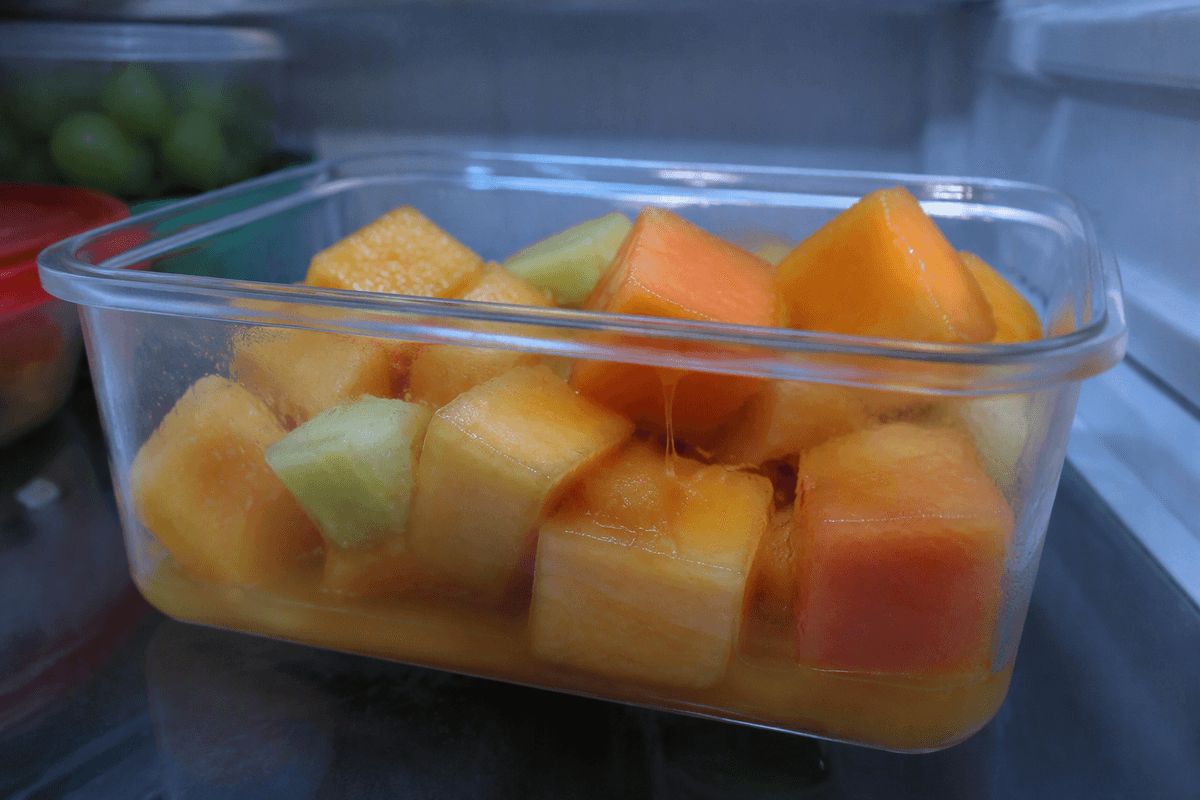
It can feel subtle at first: your fingers don’t come away sticky, exactly, but there’s a faint slickness on the surface, and the cubes don’t separate as cleanly when you scoop them. Sometimes a piece stretches a little, with thin strings that weren’t there the day you cut it. People often chalk this up to “just being extra juicy,” especially if there’s pooled liquid in the bottom of the container.
That slippery, slightly tacky feel is often what shows up when the cut surface has been sitting wet for a while and the flesh is starting to break down. Once the texture shifts, it’s a sign something has changed on that exposed surface—whether from microbes, enzyme activity, or both—and it tends to accelerate if the fruit had warm time or a fridge that runs unevenly. A few pieces may still feel crisp while others turn slick, which can make “just eat the good ones” seem reasonable even when the overall batch is moving in the wrong direction.
Sour, fermented, or chemical smell from the flesh
Sometimes you only notice it when you open the lid close to your face: the smell isn’t “watermelon” anymore. It may come off slightly sour, like a fizzy fruit drink, or oddly sharp in a way that reads more chemical than rotten. Because the color can still look normal, that first whiff can feel easy to doubt—especially if the fridge smells a little like onions or leftovers and you’re not sure what you’re picking up.
But smell changes tend to show up when the sugars are being broken down and new compounds are building up in the wet, exposed flesh. That can happen faster after warm time, after a lot of container opening and closing, or when juice has collected and pieces sit partially submerged. One cube can seem fine while the pooled liquid carries most of the off-odor. If the smell is noticeably tangy, fermented, or “cleaner-like,” it’s usually a sign the batch has moved past the low-regret zone.
Color changes, dullness, and watery puddles in the container
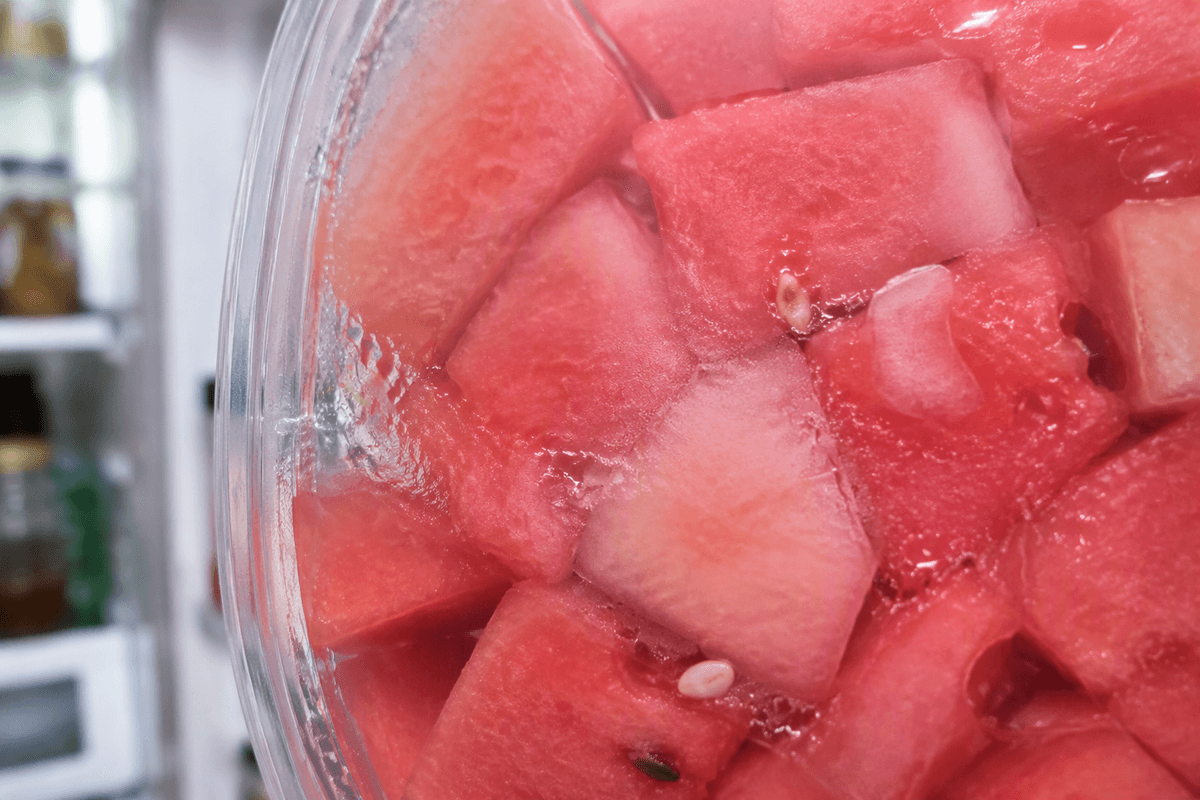
The first clue is often visual, but not dramatic: the red looks a little tired. Instead of that crisp, translucent shine, the flesh may turn dull or slightly cloudy, and the edges can look washed out. In some containers, the color even seems to “bleed,” with paler patches on the cubes that were pressed against the lid or sitting in juice. It’s easy to blame the fridge light or the angle you’re looking at it from, especially if a few top pieces still look bright.
Then you tilt the container and realize there’s a shallow puddle that wasn’t there before. Watermelon always releases some juice, but extra liquid usually means more breakdown: cells have softened, surfaces have stayed wet longer, and the cold has had more chances to fluctuate. The frustrating part is the mixed message—still-red cubes floating in clear liquid can look harmless—yet the overall “watery, faded” look often shows up right as the safety window gets harder to trust.
Fuzzy spots, white film, or unexpected surface specks
It’s usually when you’re about to eat it that you catch it: a tiny fuzzy dot on one corner, a faint white film where two cubes were touching, or a few pale specks that weren’t there yesterday. Because watermelon is wet and slightly glossy to begin with, it can be hard to tell whether you’re looking at harmless dried sugar, a bit of paper towel lint, or something actively growing—especially if the container has condensation and the light in the fridge is harsh.
But fuzz, a powdery-looking patch, or a thin surface “skin” is one of the clearer signals that the surface has stayed damp long enough for growth to get established. The annoying part is how localized it can look: one cube seems affected while the rest still looks bright. In practice, that spot is often the visible part of a bigger problem in the pooled juice and on nearby surfaces. When you see film or fuzz, picking around it tends to be a higher-risk gamble than it feels.
Temperature mishaps that quietly change the safety window
You might not think much of the “sweaty” container on the counter while you answer a call or pack a lunch. The lid goes back on, the watermelon goes back in the fridge, and it still feels cold when you grab a piece later. But those small warm stretches add up, especially when the fruit is already cut and wet. A fridge that runs a little warm, an overstuffed shelf that blocks airflow, or keeping the container in the door can mean the watermelon spends more time in the temperature range where bacteria grow faster—even if it never feels “room temp” to your hand.
The temperature-related trouble doesn’t always announce itself right away. After a few slips, you may just notice more juice, softer edges, or a faint tang that comes and goes depending on which pieces were sitting in liquid. And because the top layer can look fine, it’s easy to underestimate how much the bottom pieces—warmer during the gap, wetter afterward—may have changed.
When mixed messages appear, choose a low-regret call
You take a piece from the top and it snaps like it should—sweet, cold, familiar. Then you nudge the bottom layer and notice the puddle again, a softer corner, a smell that isn’t exactly bad but isn’t clean either. This is the moment that trips people up: the “good” pieces make the whole container feel redeemable, even though the parts that stayed wet and warmed up fastest are usually the ones giving you the real information.
When signs disagree, it helps to treat storage history as a vote that counts. If it was cut more than a few days ago, sat out during prep, rode around warm, or lived in a fridge door that swings in temperature, the bar for trusting “looks fine” gets higher. A sharp or fermented whiff, slick texture, visible film/fuzz, or a batch that’s turning watery and dull are all nudges toward a low-regret decision to toss—especially if you’d hesitate to serve it to someone else.