You’re cleared to work, but not full-time
The release note lands with a small victory and a new problem: “return to work,” but with a cap on hours. Payroll treats that as a clean restart, while your body treats it as a trial run. The friction shows up fast—your manager wants a schedule for next week, HR wants a status code in the system, and you’re still guessing whether 20 or 30 hours is realistic without a setback. The mistake people make here is agreeing to hours first and asking benefit questions later, because the first schedule often becomes the “normal” everyone measures you against.
Before you commit to a number, pin down what “not full-time” means inside your employer’s rules, not just your doctor’s. Ask what weekly hours keep you classified as benefits-eligible, whether the company counts hours by week or by an averaging period, and when the change takes effect (next pay period, end of month, or immediately). Timing is the constraint: one pay cycle at reduced hours can trigger benefit deductions you didn’t plan for, or flip a status that’s hard to unwind without another HR review.
Before you accept hours, map your income sources
What usually trips people up isn’t the reduced schedule itself, it’s the way income stops being “one paycheck.” The moment you give a number of hours, you’re creating at least three streams that can overlap for a week and then separate: gross wages from payroll, any remaining short-term or long-term disability benefit, and any accrued PTO you may be forced to burn (or tempted to use to “top up” hours). The constraint is timing: payroll may lag by a pay period, while the insurer can adjust benefits based on earnings in the same week you return.
Map it like a cash-flow worksheet, not a feeling. For each source, write down (1) what triggers a change (hours worked, dollars earned, doctor certification, “return to work” date), (2) how the amount is calculated (percentage of pre-disability earnings, offsets, minimums), and (3) when it hits your bank account. Then run two versions: a “clean” schedule with only worked hours, and a “patched” schedule where PTO fills the gaps. The second version can look safer, but it can also accelerate disability reductions and leave you with fewer paid days when restrictions drag on.
Reduced hours can quietly reset health coverage rules

By the time the first reduced-hours schedule is approved, the health plan can already be watching a different variable than your doctor is: “eligible hours.” The friction is that payroll records what you’re paid for, while benefits systems often care about what you’re coded for (full-time, part-time, leave, partial return). If HR flips your status to part-time to match the schedule, some plans treat that as a new eligibility event, not a temporary accommodation. It can land mid-month, and the first sign may be a higher deduction, a bill for back premiums, or a notice that coverage will end unless you elect something else quickly.
Two constraints drive the risk: measurement windows and waiting rules. Many employers use an hours lookback (or an average-hours test) that doesn’t line up with your “restriction period,” so one low-hours month can start a clock that’s hard to reverse. Separately, if coverage ends and restarts, you can trigger new enrollment deadlines, different employer contributions, or even a fresh deductible rhythm in practice (especially if you switch plans or have to bridge coverage). The practical move is to ask, in writing, what happens to medical, dental, and vision if your reduced schedule lasts 4 weeks versus 12—and what exact date the system would reclassify you.
Disability payments may shrink faster than you expect
The first reduced-hours paycheck is when the math can turn on you. A lot of disability plans don’t “stack” wages on top of a fixed benefit; they recalculate the benefit as soon as you have earnings, sometimes week-by-week. If the policy uses an earnings test, a single heavier week (extra shift, training day, or a payout that lands in the same pay period) can be treated as “capacity restored” and trigger a benefit cut that’s bigger than the extra wages. The constraint is reporting lag: payroll finalizes after the work is done, while the insurer may adjust (or overpay) first and then claw back later.
Get the offsets in plain numbers before you rely on the deposit. Ask what counts as “earnings” (worked hours, PTO, bonuses, retro pay), what period is measured (weekly vs monthly), and whether there’s a minimum partial benefit or a hard cutoff once earnings hit a threshold. Once you know the test window, you can schedule steadier hours instead of accidentally tripping it.
Job protection changes when restrictions outlast leave
After a few weeks of “temporary” restrictions, the conversation often shifts from benefits math to coverage of a different kind: whether the role is still being held. The constraint is time. If your protected leave bucket is already used up (or never applied cleanly to the disability period), the promise of returning to “the same or equivalent job” can soften into “we’ll try.” That’s when schedule changes, new coverage codes, and performance expectations start to interact in ways that feel personal, even when they’re just policy.
What to verify is the trigger that changes your status from protected leave to an accommodation request. Ask HR whether your job protection was tied to a specific leave program, the exact exhaustion date, and what happens if restrictions extend past that date. Separately, confirm whether your reduced schedule is being treated as a short-term transitional arrangement or an open-ended modification of essential job functions. The second framing can invite a reassignment or role change faster than people expect, especially if staffing needs force a backfill.
Build a two-month cash plan for the transition gap
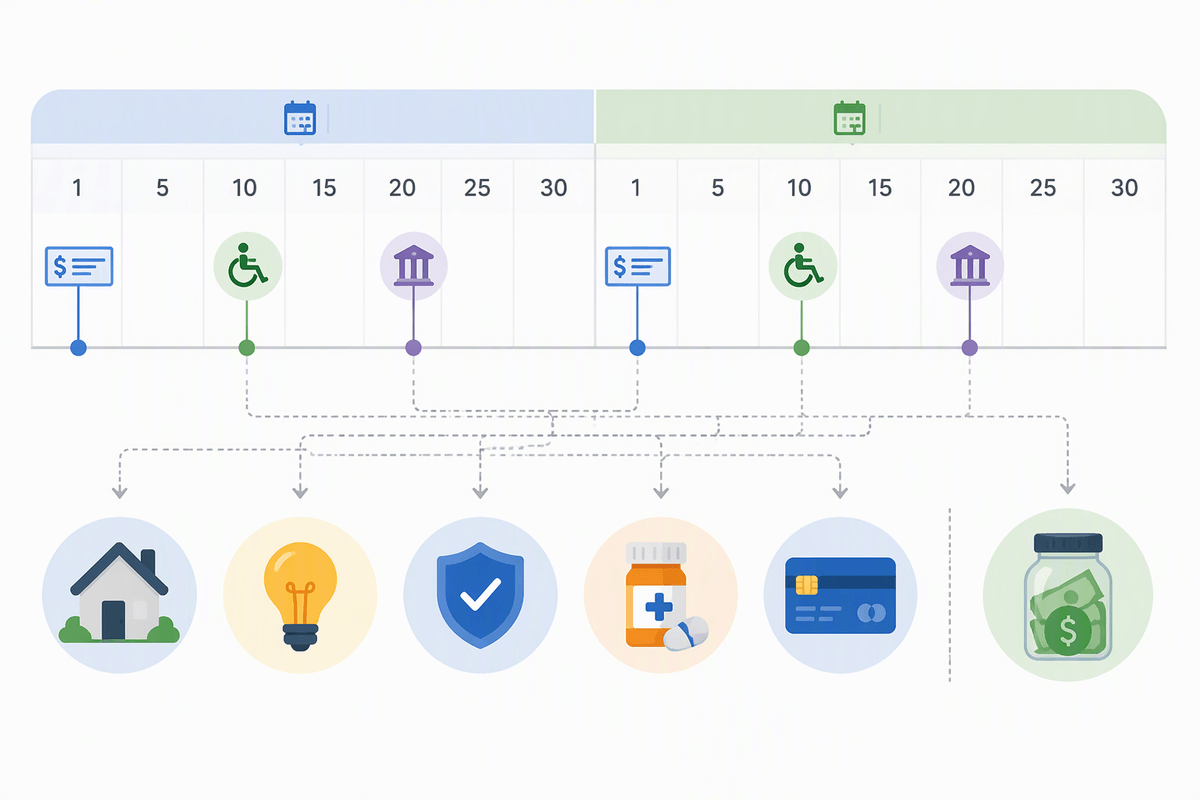
The next snag is that the first month back rarely reflects the “steady state.” Payroll may be one cycle behind, disability may be recalculated on earnings from the very first week, and deductions can change as soon as HR codes the status update. That creates a transition gap where two people with the same reduced schedule can see very different take-home pay depending on timing. The constraint isn’t just the lower hours; it’s that the cash hits your account on different days than before, while bills still clear on their usual dates.
Build a two-month plan that assumes at least one mistake or delay. Start with a calendar view: list pay dates, expected disability deposit dates, and the first paycheck that actually reflects reduced hours. Then set “must-pay” items (rent/mortgage, utilities, insurance premiums, minimum debt payments, key medications) and mark what can slide once without a penalty spiral. If you use PTO to stabilize cash, treat it like a limited bridge fund: decide upfront how many hours you’ll spend in month one and how many you’re reserving in case restrictions last longer than promised.
Finally, add a small buffer line for clawbacks and true-ups. If the insurer overpays and later adjusts, the repayment often lands in the same window you’re trying to rebuild a normal paycheck. A two-month plan that survives a surprise deduction is the one that lets you ask better questions next, instead of accepting whatever schedule keeps the lights on.
Bring these questions to HR and the insurer
Once the cash plan is on paper, the next move is getting answers that hold up when payroll runs. Bring HR a short list: what status code will be used while you’re on reduced hours, the exact weekly-hours number that keeps medical/dental/vision active, and the date the system rechecks eligibility. Ask what happens if deductions spike or coverage ends mid-month, and what the deadline is to elect a bridge option if that happens. If a manager is setting hours, confirm who has final authority to approve exceptions.
With the insurer, stay narrow and numeric. Ask what counts as “earnings” (worked hours, PTO, retro pay), what measurement window applies (weekly or monthly), and whether there’s a minimum partial benefit or a hard cutoff. Get the reporting process: who sends wages, how often, and how overpayments are recovered. The goal isn’t reassurance; it’s a timeline you can budget against.