You need money now, but the résumé feels urgent
The email lands while rent is due in ten days and your loan autopay is already queued. The internship sounds like proximity to the thing you want—real projects, a recognizable name, maybe a referral—but it also quietly assumes you can float groceries, transit, and a month of missed wages. Meanwhile, the paid shift work feels like retreat, even if it keeps your bank account from pinning at zero. The friction isn’t motivation; it’s timing. You’re being asked to choose under uncertainty, with a deadline that doesn’t care about “long-term upside.”
So the question becomes blunt: can your current cash flow absorb a no-pay month without creating a bigger problem—late fees, credit card balances, or taking on higher-interest debt just to stay enrolled and housed?
Start with your non-negotiables: cash flow and runway
Before you evaluate “career upside,” you need two numbers that don’t negotiate: monthly net cash flow and runway. Net cash flow is what’s left after rent, minimum debt payments, utilities, food, transit, and any fixed school costs that hit regardless of hours worked. Runway is how many weeks your current cash plus reliable income can cover that baseline without adding new balances. If the internship is 12 weeks unpaid, but your runway is 4, the decision is already partially made unless you can close the gap with savings, a guaranteed stipend, or a paid schedule around it.
Make it concrete: list your minimum monthly burn, then add internship-specific costs (commute, parking, work clothes, higher meals out, software). Then stress-test timing: what happens if payroll from a fallback job starts two weeks late, or a roommate payment slips? If the plan requires a credit card “just temporarily,” treat that as borrowing at the card’s APR, not as a neutral bridge. Your non-negotiable is staying solvent while still enrolled and housed.
Price the internship like a purchase, not a “chance”

Once you know your runway, the internship stops being a vague “career move” and starts looking like something you’re buying with cash you don’t have. The price tag is the wages you’re choosing not to earn plus the extra costs the role adds. If you can work 25 hours a week at $18/hour and the internship takes 25 hours, that’s about $450 a week you’re forfeiting. Over 12 weeks, that’s $5,400 before taxes. Add the line items that show up in real life: two transit rides a day, parking, a better phone plan for calls, meals you wouldn’t have bought if you were home between classes.
Then ask what you’re getting for that price, in deliverables you can actually use. “Experience” is not a deliverable; a portfolio piece, a shipped feature, a letter of recommendation, or a manager who will introduce you to three hiring leads is. If the role can’t name the projects, the tools, who you report to, and what “good performance” means, you’re being asked to pay full price for an undefined product. Under tight cash flow, undefined is usually too expensive.
Add the quiet cost: debt interest and lost compounding
The “price tag” also keeps running after the internship week ends. If the missing wages push $2,000 onto a credit card at 24% APR, that’s roughly $40 a month in interest if you only make minimum-ish payments, and it can linger long after the internship is over. Student loans can have a similar effect if you end up borrowing an extra term because hours worked fell. The résumé line item feels clean; the balance sheet doesn’t.
Then there’s the cost you don’t see because nothing gets billed: lost compounding. If the paid alternative would let you set aside even $50–$100 a week, skipping that for 12 weeks is not just “$600–$1,200 less saved.” It’s also a missed habit and a missed head start on an emergency buffer that prevents the next surprise from becoming debt. Under tight runway, the internship isn’t only unpaid; it can convert future income into interest expense and delay the point where money stops being the limiting factor.
Reality-check outcomes with three scenarios you can live with
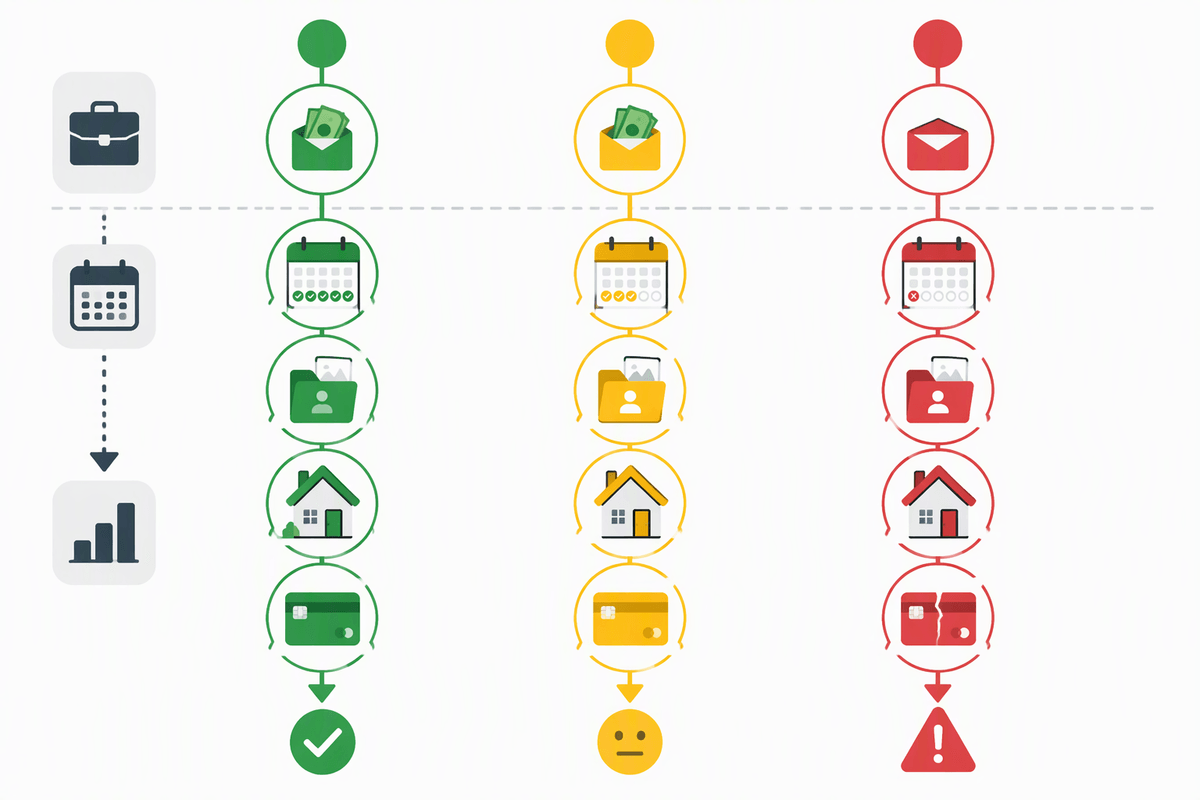
At this point the pressure usually shifts: the internship starts to feel like a bet you’re either brave enough to take or too cautious to take. Don’t leave it there. Put it into three outcomes with numbers attached, using the same time window (the internship length plus the first 8–12 weeks after). Constraint one is obvious: what your checking account and credit balances look like at the end of that window, not just at week two when adrenaline is high.
Scenario A is the “works” version: you finish, you get a strong reference, and you land paid work quickly—write down the earliest realistic start date and what you’d earn. Scenario B is the “neutral” version: you finish, you have a portfolio line, but hiring takes longer; assume a normal job search lag and include at least one month of partial income. Scenario C is the “miss” version: no offer, no warm leads, and you’re scrambling—price in higher card balances, a delayed tuition bill, or needing extra shifts that collide with classes. If Scenario C breaks rent or minimum payments, that’s not pessimism; it’s a boundary.
Negotiate or redesign the role before you decide
Now treat the offer like a draft, not a verdict. Go back with the numbers: “My baseline expenses require $X/week. If I take this as written, I’m short $Y over 12 weeks.” Then ask for specific edits that change the cash outcome: a stipend, hourly pay after a two-week trial, fewer hours so you can keep a paid shift, or a hybrid schedule that cuts commute spend. If they can’t add cash, push for expense coverage (transit, parking) because that’s still real burn.
Redesign the work so the upside is contractible. Ask to define two deliverables you can ship, who signs off, and what a strong reference requires. Put a date on the conversion conversation. If they won’t change pay, scope, or timing, you’ve learned something useful about the risk—and you can stop negotiating with your rent.
Choose a default that protects you if you’re wrong
When the numbers still don’t give you a clean answer, set a default that limits damage if the upside doesn’t show up. If Scenario C had you floating rent on a card, the default isn’t “take the internship and hope,” it’s “keep paid hours and only accept the internship if cash terms change.” That can look like a hard floor: no new revolving debt, no missed minimum payments, and at least one month of expenses untouched in checking or savings.
Build an exit ramp before week one: a date when you re-check balances, a threshold where you reduce hours or walk, and a backup job lead you keep warm. If the internship is truly worth it, it should survive a plan that assumes you might be wrong.