Why Kiwi and Prunes May Affect Constipation
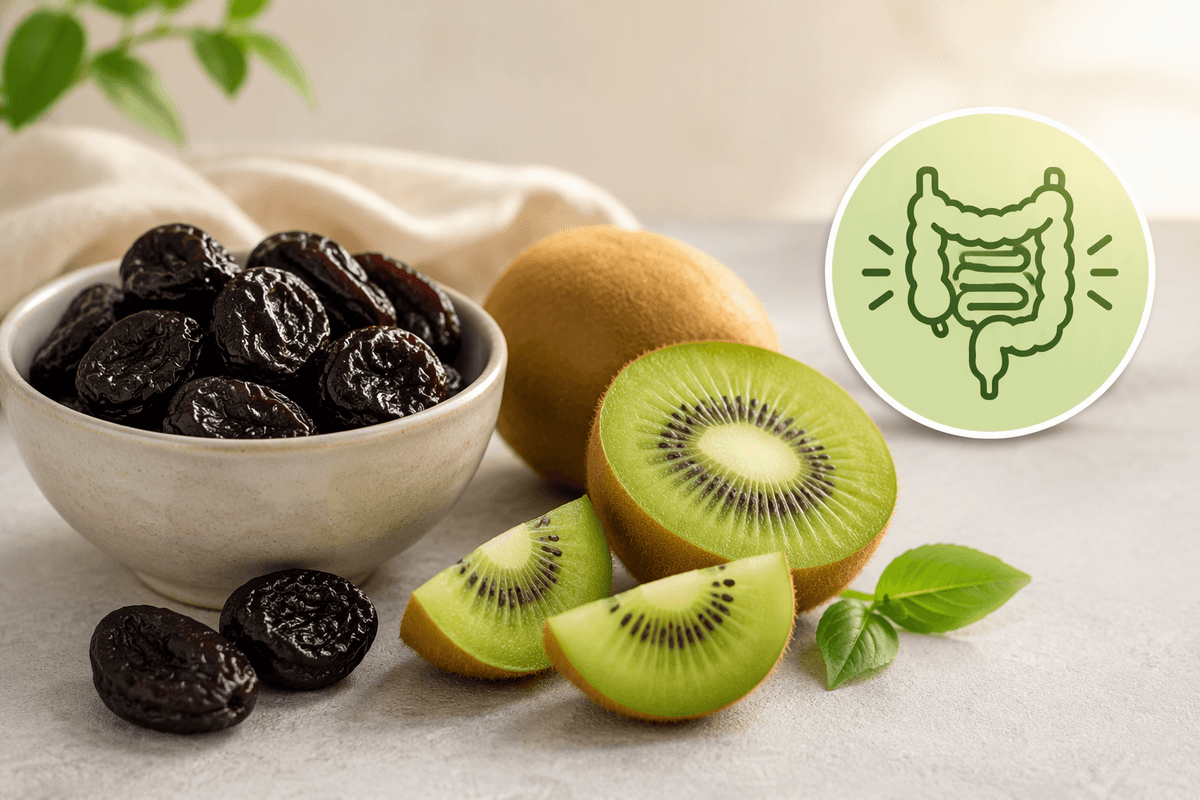
A harder stool can feel less like a sudden problem and more like a gradual change: fewer bowel movements, more straining, or the sense that stool is sitting longer than usual. Kiwi and prunes may help because they add fiber, which can increase stool bulk and help retain water as it moves through the bowel. The effect is not always immediate, especially when a change in routine, travel, low fluid intake, or reduced activity is also slowing things down.
Prunes may have an additional influence because they contain sorbitol, a naturally occurring sugar alcohol that can draw water into the bowel in some people. That may make stool softer or easier to pass, although it can also bring bloating, gas, or urgency when the portion is larger than the body tolerates. Kiwi may feel gentler for some adults, while others notice little change. These differences make stool consistency, frequency, and comfort more useful signals than expecting either fruit to work in exactly the same way for everyone.
Kiwi and Prunes Work Through Different Routes

After adding one of these fruits, the first noticeable change may not be a bowel movement. Some people instead notice that stool is less dry, passes with less effort, or appears in a slightly larger amount. Kiwi’s fiber includes material that can hold water and add structure to stool, while its texture and small seeds may support movement without producing a strong laxative effect. The response may be gradual, and it can be difficult to separate the fruit’s influence from changes in fluids, meals, or activity happening at the same time.
Prunes may follow a different pattern. Their fiber can add bulk, but sorbitol may also pull water into the bowel, making the result more noticeable in some adults. That can mean softer stool or more frequent urges, but sometimes gas, cramping, or urgency comes first. A person may therefore interpret increased activity as proof that the fruit is helping, even when discomfort is becoming the limiting factor. The useful distinction is whether bowel movements become easier and more comfortable, not simply whether something happens quickly.
What Changes Beneath the Surface Over Time
By the next day or two, the change may be easier to notice in the stool itself rather than in the clock. A bowel movement may remain less frequent but feel softer, require less straining, or pass in a larger, more formed amount. This can happen as fiber holds more water and adds shape while the bowel gradually moves older stool forward. The process is uneven, though, so one comfortable movement does not always mean the pattern has fully changed.
With prunes, the shift may appear sooner as increased urgency, softer stool, or extra gas, while kiwi may produce a quieter change over several days. If fluid intake remains low or activity drops, added fiber may have limited effect and can sometimes leave a person feeling fuller or more bloated. The practical signal is not simply that stool becomes more frequent. It is whether softness, ease, and comfort improve together without creating new discomfort that makes the dietary change difficult to continue.
When More Fruit Creates More Discomfort

The abdomen may feel tighter before the stool becomes easier to pass. Adding larger amounts of kiwi or prunes can increase fiber and fermentable carbohydrates faster than the bowel is used to handling, leading to gas, fullness, rumbling, or cramping. Prunes may be especially noticeable because sorbitol can draw water into the bowel; in some adults, that produces loose stool or urgency rather than comfortable regularity. The change may feel like progress at first, but discomfort can make it harder to continue eating normally or staying active.
More fruit is therefore not always a better test of whether the approach works. If bloating grows while stool remains difficult to pass, the added volume may be outpacing fluid intake or personal tolerance. Responses can also vary from one day to the next, particularly during travel, stress, or a disrupted routine. A useful adjustment is to pay attention to the smallest amount that improves softness or ease without creating persistent pressure, gas, or urgency. Comfort remains part of the result, not a separate concern.
Portion, Preparation, and Personal Tolerance Matter
A small serving may be easier to understand than a large one. A few prunes eaten with a meal can produce a different response from several eaten quickly on an empty stomach, just as one kiwi may feel manageable while multiple servings add unwanted fullness. Dried fruit is also more concentrated than fresh fruit, so the portion can become larger than it appears. Preparation matters too: eating prunes slowly, choosing kiwi that is ripe but not overly soft, and keeping the rest of the meal familiar can make changes easier to interpret.
Personal tolerance may shift with fluid intake, stress, travel, and how regularly these foods are eaten. Someone may notice softer stool one day and gas or little change the next, even with a similar portion. Rather than treating that inconsistency as failure, it can help to observe whether a smaller, repeatable amount supports easier passage. If discomfort appears before any improvement, the portion or timing may be the problem—not necessarily the fruit itself.
Why Constipation May Persist Despite Dietary Changes
The bowl may look different without becoming easier to empty. Kiwi or prunes can soften stool, yet constipation may continue when the bowel is moving slowly because of travel, reduced activity, stress, irregular meals, or a daily routine that makes urges easy to postpone. Low fluid intake can also limit the benefit of added fiber. In that situation, a person may notice more bulk or gas while older stool remains difficult to pass.
Other changes may be less obvious. A new medicine, a sudden increase in fiber, or eating less overall can alter bowel habits, while pelvic tension or repeated straining may make passage feel incomplete. It is also possible that the chosen fruit simply produces little noticeable effect for that individual. Paying attention to the pattern over several days—softness, effort, frequency, bloating, and the feeling of complete emptying—gives a clearer picture than judging the diet after one bowel movement. If constipation continues despite reasonable changes, the fruit may be only one small part of the situation.
Interpreting Relief, Nonresponse, and Warning Signs
A softer stool or easier passage usually suggests that the change is helping, even if bowel movements are not suddenly daily. Relief may also mean less straining, less pressure, or a more complete feeling afterward. By contrast, continued hard stool, increasing bloating, repeated urgency without comfortable emptying, or no meaningful change over several days suggests that kiwi or prunes may not be addressing the main factor. Their effect can also be limited when fluids, movement, routine, or medication changes continue to work against regularity.
Some patterns deserve more caution than dietary trial and observation. Blood in the stool, severe or persistent abdominal pain, vomiting, marked swelling, inability to pass gas, or a sudden bowel-habit change should not be explained away as ordinary fruit intolerance. Medical advice is also sensible when constipation keeps returning, becomes difficult despite reasonable adjustments, or is accompanied by unexplained weight loss or unusual weakness. The useful question is not only whether fruit produces movement, but whether the overall pattern is becoming easier, safer, and more comfortable.