Why Atitlán weaving feels different
I almost booked a “weaving tour” on day one—then hesitated, because Lake Atitlán is one of the easiest places in Guatemala to see textiles and one of the easiest places to see them flattened into a quick demo. What feels different here is the density: weaving isn’t tucked into a single workshop; it’s threaded through markets, ferries, and family courtyards. The catch is that access varies by town—some spots are friendly to drop-ins, others feel guarded (for good reason), especially when groups arrive at once.
Atitlán weaving also reads like a local language: patterns can signal village identity, personal history, and religious meaning, but you won’t decode it in an afternoon—especially with limited Spanish. That’s not a failure; it just changes the goal. Instead of “seeing everything,” you get more by choosing 1–2 communities to meet slowly, asking before photographing, and treating a purchase as a relationship moment, not a checkout line.
Weaving basics: huipiles, backstrap looms, symbols
The first time I held a huipil up to the light in a market stall, it looked almost flat—until the sun caught the brocade and you could feel the raised threads with your fingertips. That tactile difference matters, because “embroidered” and “woven” get used interchangeably in tourist conversations, and it’s the fastest way to overpay for something machine-made. A huipil is the traditional blouse, usually built from woven panels sewn together; the weight, the seams, and the slight irregularities are often where the truth shows up, not in the loudness of the colors.
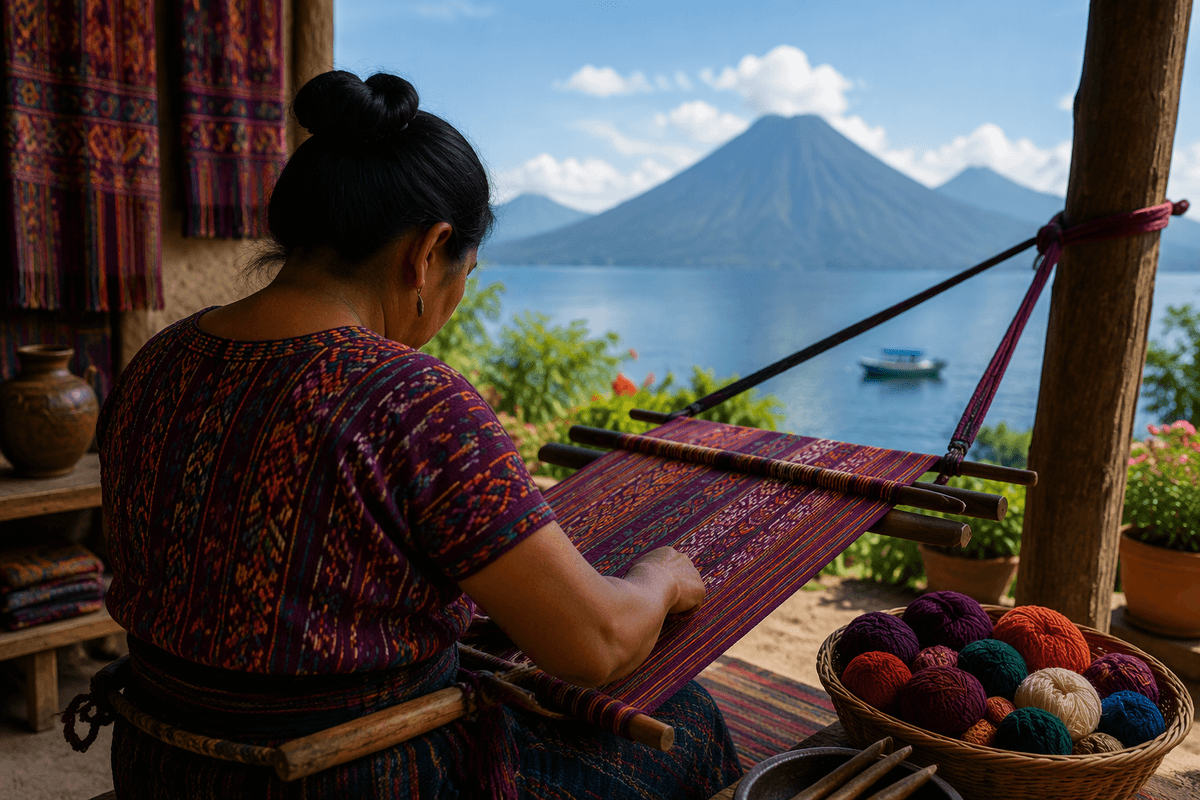
Most of what you’ll see around the lake starts on a backstrap loom, which is both elegant and brutally physical: one end tied to a post or tree, the other around the weaver’s waist, so body tension controls the warp. It’s mesmerizing, but it’s also slow—fine brocade can mean weeks, not hours—so be wary when a vendor implies “my aunt made this” while selling five identical pieces. Symbols are the trickiest part: motifs can reference birds, mountains, corn, or faith, but meanings shift by village and even by family. If you want to ask without turning it into a quiz, “¿Qué significa para usted?” usually lands better than “What does it mean?”
Village guide: who weaves what around the lake
I kept trying to “optimize” the lake—hit three towns before lunch, chase a market day, squeeze in a demo—and Atitlán punished that mindset fast. Boats don’t run like clockwork, afternoons get windy, and the moment you find a quiet workshop you’ll want longer than you planned. The better move is picking one anchor town for a half-day and letting the second visit happen only if transit and energy cooperate.
If you want a low-friction intro with a higher chance of direct-to-maker purchases, San Juan La Laguna is the easiest starting point: cooperatives and small studios are relatively close together, and you can walk between them without burning a full day on transport. It can feel “curated” (especially on busy mornings), but I’ve still had the clearest conversations there because the setting is calmer than a market stall.
Santiago Atitlán has a more local, working-town feel and the shopping can be less polished, but it’s also harder with limited Spanish and the distance can turn a quick visit into a commitment—especially if you miss the last boat rhythm back. For pattern-spotting, San Pedro is convenient from Panajachel and lively at night, yet textiles there skew more tourist-facing, so I treat it as browsing and then buy only when I can meet the weaver or co-op team.
One practical filter: prioritize places where someone can tell you who made the piece, what it’s made of (cotton vs blends), and roughly how long it took—without rushing you. If the story is too smooth, the showroom too empty, or the “demonstration” starts the second you walk in, I take it as a sign to keep moving.
How to visit respectfully and support artisans
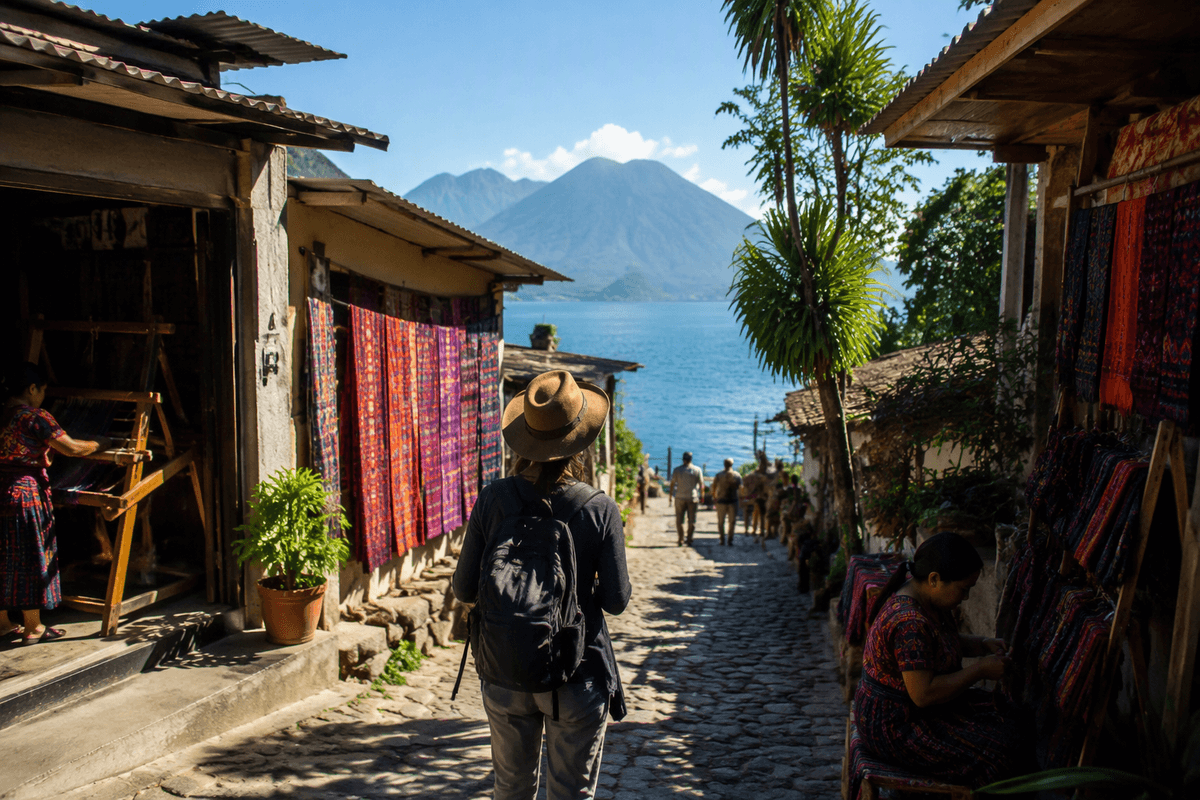
The moment I realized I was being “handled” was when a guide tried to funnel us into a loom demo right as a lancha unloaded—same script, same pose, same quick pivot to the checkout table. If you’re visiting on your own, you can avoid most of that by arriving earlier (think 9–11 a.m.) and choosing one town where you’ll walk, not hop. San Juan is still the easiest for this: you can drift between a co-op and smaller home ateliers with minimal transit friction, while Santiago often demands more commitment (longer boat time, fewer obvious signposts, and less English), which can be rewarding if you can stay patient when communication is slower.
Respect, here, is mostly about pacing and consent. Ask before photos (even of hands), don’t touch textiles without being invited, and avoid turning questions into an interview about “symbols” unless someone clearly wants to explain. If you’re buying, pay attention to who is speaking and who is silent—sometimes the best move is to ask, gently, “Did you make this?” and accept a simple yes/no.
To support artisans directly without overplanning: pick 1–2 co-ops as anchors, then leave room for a second stop only if boats and energy cooperate. Co-ops can feel a bit curated, but you’re often paying into a clearer structure; individual workshops can be more personal, but pricing and fairness are harder to read quickly—so slow down, buy fewer pieces, and don’t bargain just to prove you can.
Buying well: quality cues, pricing, and authenticity
I hesitated in front of two nearly identical shawls—same palette, same stripe rhythm—until I picked them up and felt the difference: one had a springy, even weight and tidy selvages; the other was slightly slick, with edges that wanted to curl. When you’re buying around Atitlán, “pretty” is the easy part. The harder (and more useful) question is whether the fabric was woven as fabric, or assembled quickly to hit a price point that tourists expect.
Quality cues I trust most are boring ones: consistent tension (the cloth lies flat without puckering), clean joins where panels meet, and fringe that looks finished rather than trimmed in a hurry. Ask what the fiber is—cotton, wool, or a blend—and then decide based on your actual use. Blends can wear well and cost less, but if you think you’re paying “heirloom” money, you want the materials and weave density to match. Natural dyes are worth it when you love the muted, complex colors, but they’re not automatically “better” than synthetic—just different, and usually slower.
Pricing is where authenticity gets fuzzy fast. In co-ops, higher prices can reflect fair wages and shared overhead, while in busy tourist strips a high tag can just mean rent and markup. If someone can tell you who made it, how long it took, and what would change the price (size, dye, complexity), I’m comfortable buying—even with limited Spanish. If the answer is vague, or the “weaver” disappears the moment you ask, I treat it as a browsing stop and keep my budget for a place that feels traceable.
Hands-on options: cooperatives, workshops, homestays
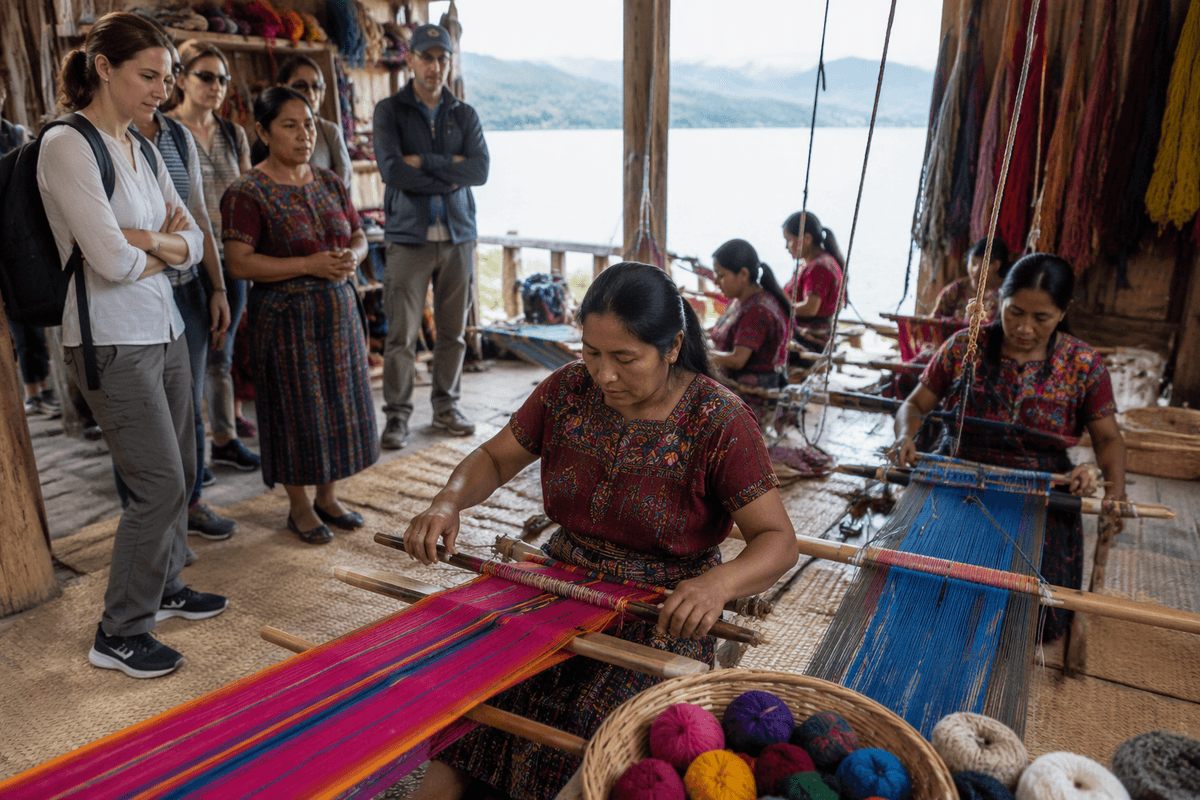
I almost booked a “weaving tour” the night before—mostly out of fear of showing up in the wrong town on the wrong day—but the more I looked, the more I realized what I was paying for was coordination, not access. If your Spanish is limited and you want low stress, a co-op visit in San Juan works well because you can usually get a short explanation, see work in progress, and buy directly without the pressure-cooker energy of a dockside showroom. The limitation is that popular co-ops can feel like a circuit by late morning, so you may have to share space (and attention) with other visitors.
Workshops are the more intimate option, but they’re also the easiest place to misread what’s happening. A good sign is when the weaver keeps working at a normal pace and someone translates only as needed; a yellow flag is when the “demo” starts on cue and ends at the cash table. If you’re choosing between tour vs DIY: tours reduce boat-and-timing friction (especially if afternoon winds kick up), but you give up the freedom to linger—or to leave when it feels performative.
Homestays can deepen everything fast, but only if you actually want the trade of comfort for closeness. Expect simpler bathrooms, earlier mornings, and less control over your schedule; in return, you may get un-staged context—who spins, who dyes, who sells—and a clearer sense of what “fair” really looks like before you buy.
Leaving the lake with meaning, not just textiles
The last morning I packed, my problem wasn’t space in my bag—it was deciding what I didn’t need to take. A fourth woven piece would have been easy; keeping my purchases tied to people and process took more discipline, especially after a few “perfect” shops where nobody could say who actually made what. If you’re leaving from Panajachel, that’s the moment to do a quick reality check: would you rather carry one item you can describe (maker, fiber, time) or three you bought on momentum?
What helped me was treating textiles like a small record of decisions, not a haul. One co-op receipt, one photo taken with permission, one name written down phonetically in my notes—those details age better than another scarf. If you feel rushed at the dock, skip the last-minute browsing; it tends to push you toward anonymous inventory and fast bargaining. The cleanest exit is buying fewer pieces earlier in the trip, then using your final day to follow up—pay the balance, pick up a custom size, or simply say thank you—because that’s when the lake stops feeling like a shopping loop and starts feeling like a relationship you briefly held well.